How Therapy Works Here
Integrative Therapy, Tailored to You
Therapy works best when you feel understood, comfortable enough to be yourself, and also willing to be challenged. I bring warmth, curiosity, honesty, and humor into the room, and I won't just sit back and nod. We'll pay attention to what is happening, get curious about the patterns underneath it, and work together on what might actually help you move forward.
Depending on what you need, that might mean practical skills, a different way of looking at something, deeper exploration, processing and resolving painful experiences, or some combination of these. I draw from evidence-based and insight-oriented approaches rather than expecting you to fit into one particular model.
Practical Skills & New Perspectives: Sometimes it helps to have something concrete to work with. We may draw from Dialectical Behavior Therapy (DBT) to navigate difficult emotions, relationships, and stressful moments, or from Cognitive Processing Therapy (CPT) and other cognitive approaches to examine beliefs and perspectives that may be keeping you stuck.
Relational Depth & Self-Discovery: At other times, the work is less about learning a technique and more about understanding yourself more deeply. Through psychodynamic and parts-based exploration, we can become curious about recurring relationship patterns, internal conflicts, and ways of protecting yourself that may once have been useful but no longer serve you in the same way.
Trauma Processing: When experiences from the past still carry an emotional charge or continue to shape how you see yourself and the world, we can incorporate focused trauma therapies such as CPT or EMDR (Eye Movement Desensitization and Reprocessing). Trauma treatment is available when it is useful, but it does not have to define the rest of our work.
Values, Meaning & Direction: Therapy is not only about reducing symptoms or understanding the past. Drawing from Acceptance and Commitment Therapy (ACT) and values-based work, we can also explore what matters to you, who you want to be, and how to make choices that move you toward a life that feels meaningful and genuinely your own.
At its core, therapy is a place where you can show up as you are and not have to navigate everything alone. Some sessions may be exploratory; others may be more practical or focused. Together, we can make room for insight and action, acceptance and change, and shape the work around what you need and where you want to go.
Hello and Welcome.
I’m Vanessa Claire Soleil, a Licensed Mental Health Counselor offering telehealth to adults and couples throughout the state of New York and North Carolina and in office sessions in Central New York.
Finding the right therapeutic fit is essential. I aim to offer a space that is warm and supportive, while also encouraging the compassionate accountability and engaged practice required for real change.
I welcome adults (24+) from all backgrounds and am committed to honoring your individuality. This is a space for honest exploration, without pressure to conform to a particular worldview or agenda.
My path to becoming a therapist was not especially linear, and it has given me a distinctive perspective on the work.
Before entering the mental health field, I earned graduate degrees in history and library science and worked in women’s health. Those experiences still shape how I approach therapy. I tend to look for context, patterns, and the larger story—not just the symptom in front of us.
I also love helping people find ideas and resources that genuinely fit them. Depending on what we are working on, that might be a book about habit formation, a piece of lyric poetry, a cognitive restructuring exercise, or something else that helps a concept click in a new way.
I bring that same curiosity into the therapy room: looking closely, making connections, and helping you find useful ways to understand what you are experiencing and what might help.

Professional Background
I am a graduate of NC State’s Clinical Mental Health Counseling program, and a National Certified Counselor (NCC). I am the author of the DBT for Dating Workbook. I hold dual licensure to serve clients across New York and North Carolina.
NY Licensed Mental Health Counselor, with Diagnostic Privilege: D012839
NC Licensed Clinical Mental Health Counselor: 14892
Advanced Training
I value continuing education and regularly pursue additional training to deepen the care I offer. My postgraduate training includes EMDR Basic Training, Gottman Method Couples Therapy Levels 1 and 2, Cognitive Processing Therapy, Exposure and Response Prevention, Inference-Based CBT, extensive training in Dialectical Behavior Therapy, as well as trainings in Internal Family Systems and body-based modalities such as Hakomi.
I also bring a longstanding personal practice of meditation and body-based self-awareness through vipassana, Nia, and 5Rhythms
A little more about me…
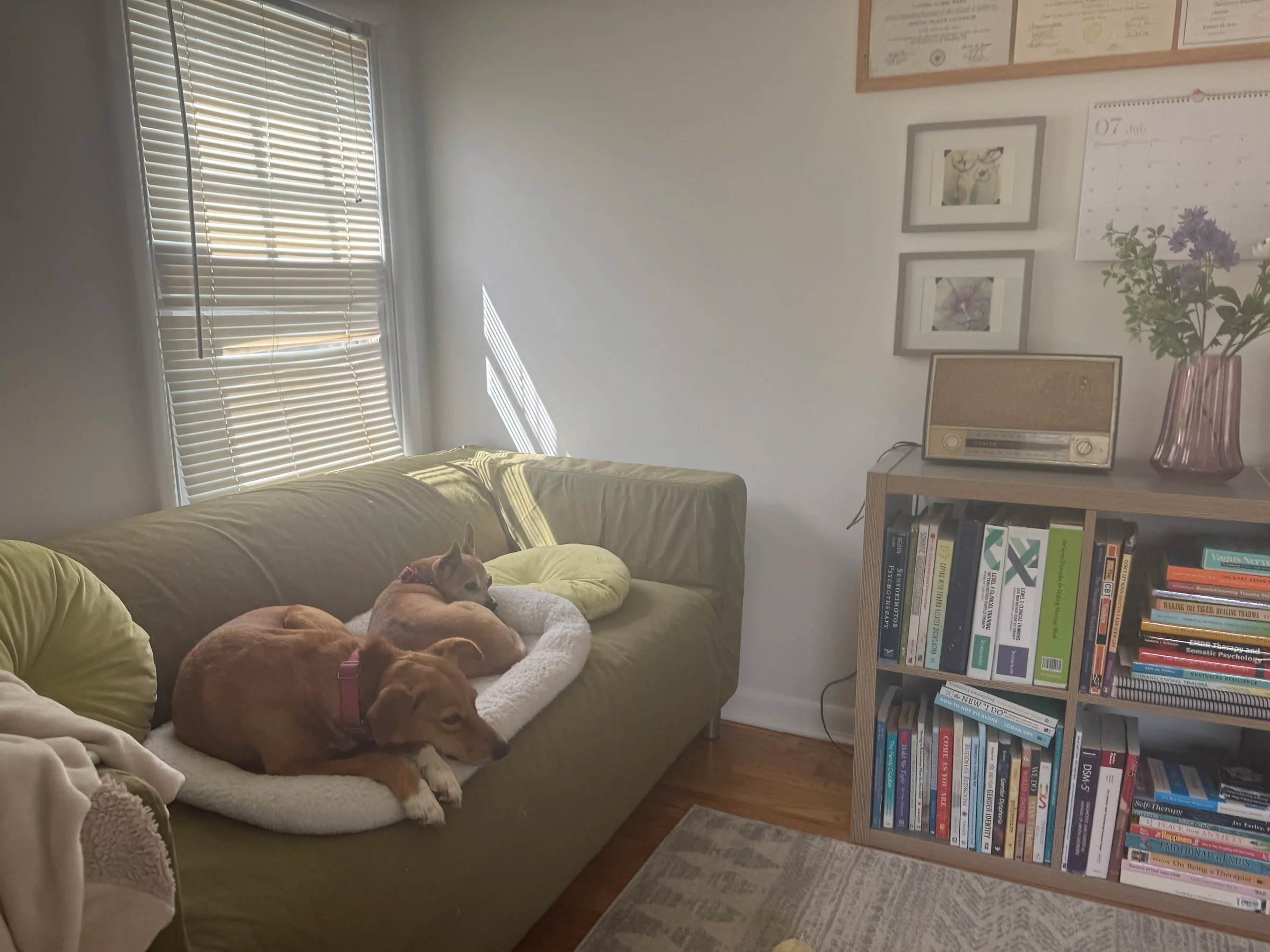
I am based in Clinton, New York, providing teletherapy to clients throughout New York and North Carolina. I believe that living a values-centered life starts with the small things. When I’m not in the therapy room, you can usually find me walking in the woods, rollerskating, or getting lost in a good book. I’m a fan of slow rituals—writing letters, making the perfect playlist, and playing board games. I live with my dog, Rosie, and with the sweet memory of my beloved dog, Yoko, who remind me daily of the importance of being present and embracing aliveness.
I am also the author of the DBT for Dating Workbook (2022), a practical guide to navigating the complexities of modern relationships with clarity and self-respect, which can be purchased here.